
Get winter ready
Not every health condition needs to be treated in our emergency department. Our urgent treatment centre and minor injuries units are open during Christmas and the New Year if you need care and treatment for a range of conditions including cuts, burns, animal bites, and anything that needs an x-ray or stitches.

Dr Ruth Bath, clinical lead at Newton Abbot Urgent Treatment Centre, shares some seasonal medical advice about which service can provide the right care, when you need it.
“Urgent treatment centres (UTC) and minor injuries units (MIU) provide medical care and help for when somebody needs to be seen the same day for an urgent problem, which can’t wait, but is not a life-threatening emergency. They can help with many of the problems people often go to an Emergency Department (ED) for.
“Choosing the right service when help is needed is so important for services across the healthcare system to manage the demands they experience.
“The units can provide care and treatment for a range of minor injuries and illnesses. This includes wounds, (cuts, lacerations and grazes), burns and scalds, sprains and strains, broken bones, bites and stings, low risk head injuries (no blood thinners or loss of consciousness) and eye problems, and minor illnesses including throat, ear and eye infections.
“The units are run by a team of highly qualified nurse and paramedic practitioners who have experience and expertise in treating minor injuries.
“Our services, however, aren’t suitable for all patients. We often see people who should have contacted their GP, visited a pharmacy or self-cared at home. This includes headaches, male water infections (UTIs), routine wound care and chronic disease management or longstanding illness. If an infection has not responded to a course of antibiotics, the urgent treatment centre or minor injuries unit will not be able to offer alternative treatment.
“We would encourage patients to try and contact their GP practice in the first instance. While we are aware GPs are under enormous pressure this remains important, especially if the issue is an ongoing health problem or concern.
“We unfortunately see many people needing wounds redressed. This isn’t a service our units routinely offer because it often requires specialised dressings that our units don’t stock. As part of a treatment plan, the clinician would have advised on the appropriate place to get wounds redressed.
“We don’t x-ray chests, backs, hips/femurs or faces, and we don’t carry out bloods for investigations. Any patient presenting with these problems may be asked to attend elsewhere.
“Other conditions that we often see that should have gone straight to an ED include chest pain and heart problems, stroke symptoms, major trauma injuries, drug overdoses, gynaecology and pregnancy related problems, and severe abdominal pain.
“Our unit teams don’t include emergency doctors. If we think there is a life-threatening or urgent medical condition, we may direct the patient to our ED at Torbay Hospital.
“We have two MIUs at Totnes and Dawlish community hospitals. Both have appointment-priority services in place, where people can phone ahead for an arrival time, with walk-ins still supported but pre-booked people prioritised. These units have limited x-ray facilities and while we are happy to assess, we may redirect to another unit to undertake x-rays if required.
“We have a UTC at Newton Abbot Community Hospital which is a more expansive service that has extended operating hours and only supports walk-in patients or those referred directly by 111. X-ray is available at the UTC from 9am to 5pm daily, excluding Christmas Day.
“Please visit our Minor Injuries Units page for more information on our units and what they can help with, and opening times.
“If you need help but you’re not sure where to go, please call 111 or visit 111.nhs.uk who can signpost you to the most appropriate service. This could be self-care, pharmacy, GP, UTC or MIU, or emergency department.”
Don’t give the gift of flu to your loved ones this Christmas
It’s not too late to protect yourself and your loved ones against the flu by getting vaccinated. The NHS is urging people to get their flu jab, as the number of people in the South West who are being hospitalised due to flu increased by three quarters (76%) in just one week.
Latest data shows the number of people in the South West in hospital with flu has gone up from an average of 79 a day in the week to 30 November to 139 a day in the last week (to 07 December). There has also been a 93% increase in the number of beds taken up by flu when compared to the same week last year (week to 07 December 2024).
The NHS is preparing for a ‘worst case scenario’ December with the flu surge leaving the NHS facing its busiest winter yet – and no peak in cases in sight and fears it could cause major disruption for patients in the run up to Christmas.
You can help the NHS and yourself by getting vaccinated as soon as possible at your GP practice. Local pharmacy, hospitals, and pop-up clinics and vaccine centres for anyone who’s eligible.
Dr Trevor Smith, Regional Medical Director for NHS England – South West said: “The rapid jump in people in hospital with flu in the last week is a real concern.
“This surge in cases is earlier than usual and confirms our fears that we could experience our worst flu season in years, just as we hit our busiest time over the Christmas and New Year period.
“That’s why it’s so important for eligible people to come forward now to get their free flu vaccination to protect themselves but also help protect the loved ones they might celebrate within the coming weeks.”
It takes up to two weeks following a flu jab to gain maximum protection, but by getting the jab in the next few days, people will still have a high level of protection during the Christmas holiday and early new year. The vaccine remains the best defence against flu and getting it at any point during the winter will help protect you and those around you through the rest of the season.
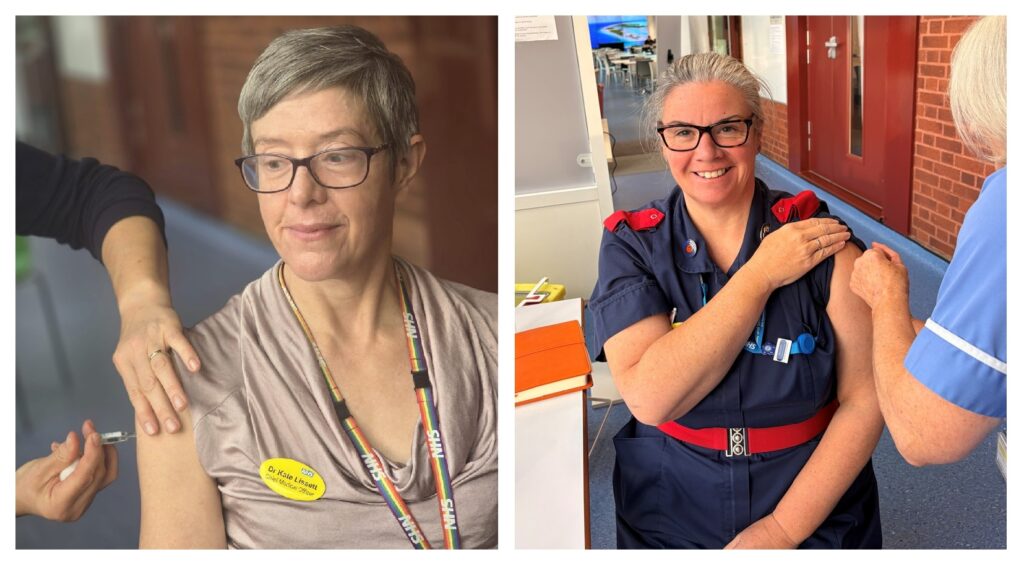
Simple hygiene measures also make a real difference in stopping flu spreading. If you have flu-like symptoms such as a high temperature, cough or feeling tired and achy, try to limit contact with others, especially those at higher risk. Wash your hands regularly, keep indoor spaces well-ventilated and if you need to go out while unwell, consider wearing a face mask.
The flu vaccination is free to:
- Those aged 65 and over (or who will be 65 by 31 March 2026)
- Have a certain long term health condition
- Are pregnant
- Live in a care home
- Are the main carer for and older or disabled person, or receive a carer’s allowance
- Live with someone who has a weakened immune system
- Are a frontline health and social care worker
The NHS is encouraging everyone eligible for a free flu vaccine – including people aged 65 and over, those with long-term health conditions, pregnant women, and young children – to book their appointment now through their GP, local pharmacy, or NHS online services.
Details of local clinics are published online at NHS England’s Boost your immunity page. Information on how to book an appointment for school-aged children who may have missed the flu vaccination at school is also available.
And if you’re unwell and not sure where to go NHS 111 can help get you to the best place for your condition, either by going online at 111.nhs.uk, on the NHS App or by calling 111.